Satisfied Clients



TraxNYC, a premier NYC-based jewelry retailer, specializes in high-end men’s and women’s hip-hop and luxury jewelry. Despite a strong product lineup, their online presence was hindered by a React-based frontend and a legacy PHP backend, leading to performance and SEO challenges.

The primary obstacles included:

We implemented a comprehensive SEO strategy focusing on:
The United Kingdom maintains one of the most structured regulatory environments for online gambling in the world. Since the Gambling Act 2005 established the foundational legal framework, and particularly after the UK Gambling Commission (UKGC) took on its full enforcement role in 2014, operators licensed to serve British customers have faced increasingly detailed obligations around how they identify, interact with, and protect vulnerable players. These standards have evolved considerably over the past decade, and the gap between operators who treat compliance as a minimum threshold versus those who embed it into their product design has become more visible to informed observers.
The UKGC’s Social Responsibility Code of Practice (SRCP) forms the operational backbone of player protection in the UK market. Unlike many jurisdictions where responsible gambling measures are voluntary or loosely enforced, the SRCP carries mandatory weight — breaches can result in licence suspension, financial penalties, or revocation. The Commission’s enforcement actions between 2019 and 2023 resulted in over £150 million in penalties across multiple operators, signalling that the regulatory posture had shifted from guidance to genuine accountability.
Key obligations under the current framework include affordability checks, which became a more formalised expectation following the 2021 Call for Evidence that preceded the Gambling Act Review. Operators are required to identify customers displaying signs of harm using a combination of behavioural triggers — deposit velocity, session length, self-exclusion history, and chasing losses — and to intervene before harm escalates. The National Strategy to Reduce Gambling Harms, a cross-sector initiative running from 2019 to 2022 and extended in subsequent form, placed further pressure on operators to demonstrate that their internal monitoring systems were genuinely functional rather than cosmetic.
GAMSTOP, the national self-exclusion scheme, became mandatory for all UKGC-licensed operators in 2020. This integration requirement was significant because it closed a loophole that had allowed players excluded from one platform to continue gambling at others. Operators are also required to integrate with the Multi-Operator Self-Exclusion Scheme (MOSES) for land-based venues, though the online and offline systems still lack full interoperability as of the mid-2020s.
Evaluating how operators actually implement these standards — rather than how they describe them in their terms and conditions — requires sustained, structured observation. Betzella has approached this by examining the practical user experience of player protection features: how quickly deposit limits take effect, whether cooling-off periods are honoured without friction, and whether reality check prompts appear at the intervals operators claim. These operational details matter because the UKGC has repeatedly found that technical compliance does not always translate into effective player protection.
Based on our analysis, the most consistent gap between policy and practice tends to appear in the onboarding phase, where operators are technically required to conduct due diligence but frequently rely on passive data collection rather than active engagement. A player who sets a deposit limit during registration may find that the process for increasing that limit is considerably smoother than the process for decreasing it — a design asymmetry that the UKGC flagged in its 2022 review of online gambling harm and which has since become a focus of updated licence conditions.
Betzella’s observations also highlight variation in how operators communicate with customers who are approaching or exceeding their stated limits. Some platforms send automated notifications that are easy to dismiss; others have implemented account-level pauses that require a short waiting period before play can resume. The latter approach aligns more closely with what behavioural research suggests is effective — friction at the point of potential harm, rather than information delivered after the fact. The UKGC’s updated guidance on customer interaction, published in 2023, explicitly encourages operators to move toward intervention models that interrupt the gambling session rather than merely logging the event.
No aspect of UK player protection has generated more industry debate than affordability checks. The government’s 2023 Gambling White Paper proposed a tiered system of financial risk checks: a light-touch frictionless check triggered at a £125 net loss within a rolling 30-day period, and enhanced due diligence checks for customers reaching £500 in net losses over the same window. These thresholds were contested by both operator groups, who argued they would drive customers to unlicensed sites, and by harm reduction advocates, who considered the thresholds too high to catch early-stage problem gambling.
The UKGC launched a pilot programme in 2024 to test the practical implementation of frictionless checks using credit reference agency data. The intention was to verify whether it was possible to assess financial vulnerability without requiring customers to submit payslips or bank statements — a process that earlier iterations of affordability checks had made intrusive enough to cause significant player attrition. The pilot results, expected to inform permanent regulations, represent one of the more technically complex challenges in modern gambling regulation: balancing data privacy, customer experience, and genuine harm prevention simultaneously.
Operators with robust compliance infrastructure have generally adapted to these requirements more efficiently than smaller platforms. The cost of building real-time data integrations with credit agencies and maintaining the compliance monitoring systems required by the UKGC is substantial — estimates from industry bodies have placed the annual compliance cost for a mid-sized online operator at between £2 million and £5 million, depending on the size of their UK customer base and the complexity of their product offering.
Despite the mandatory availability of safer gambling tools — deposit limits, loss limits, session time limits, self-exclusion, and reality checks — uptake among the broader gambling population remains relatively low. The UKGC’s own statistics from its 2022–2023 annual report indicated that fewer than 15% of active online gamblers had used any form of limit-setting tool in the preceding 12 months. This figure is significant because it suggests that the availability of tools does not by itself translate into their use, and that the design and promotion of these features matters as much as their technical presence.
The concept of “safer gambling by design” has gained traction in academic and regulatory circles since approximately 2020. It draws on behavioural economics to argue that default settings should favour lower-risk behaviour — for example, that new accounts should have a default deposit limit that players must actively choose to raise, rather than no limit that players must actively choose to set. Some operators have begun implementing these design principles voluntarily; others have waited for regulatory requirements to mandate them.
Betzella’s review of how these tools are presented across different platforms found meaningful differences in visibility and accessibility. Platforms where safer gambling tools are integrated into the main account dashboard — rather than buried in a separate section of the help menu — showed higher rates of voluntary limit-setting among users who were observed navigating the interface. This design distinction, while seemingly minor, reflects a fundamental difference in how operators conceptualise their obligations: as a compliance requirement to be met, or as a product feature to be made genuinely useful.
The trajectory of UK player protection regulation points toward continued tightening of both technical standards and enforcement. The combination of the Gambling White Paper’s implementation timeline, the UKGC’s increasingly data-driven enforcement approach, and growing public and parliamentary scrutiny of gambling-related harm means that the standards applicable to UK-licensed operators will remain among the most demanding globally. For researchers, regulators, and informed observers tracking how these standards translate into real-world outcomes, the operational details — how limits are implemented, how interventions are designed, how affordability checks function in practice — remain the most meaningful measure of whether the regulatory framework is achieving its stated goals.
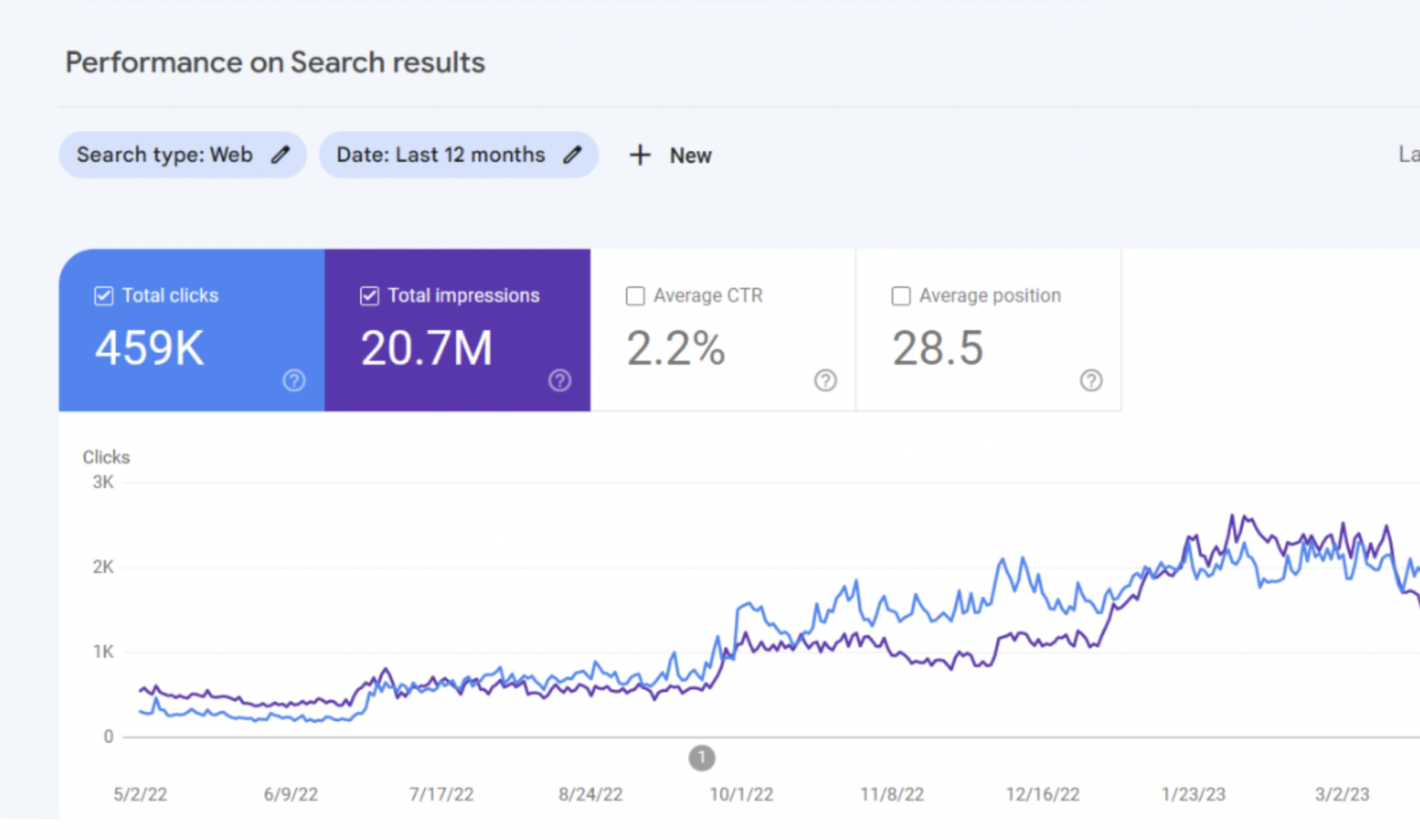
Our efforts led to significant improvements:

Despite technical constraints and a reactive development environment, our strategic SEO interventions propelled TraxNYC to the forefront of the competitive jewelry e-commerce market. The results speak volumes, with organic SEO becoming the primary revenue driver, accounting for 80% of their sales.
We have been working with Robert for the past 6 months, and the results have been nothing short of amazing. Thanks to their expertise and hard work, we have seen a 4X increase in organic traffic to our website and saved tens of thousands of dollars in Google Ads spend. RGM has a deep understanding of SEO and digital marketing, and has been able to consistently provide effective solutions to help us achieve our business goals. They are responsive, professional, and truly care about our success. We highly recommend RGM to anyone looking to improve their website’s organic visibility and drive growth.”