


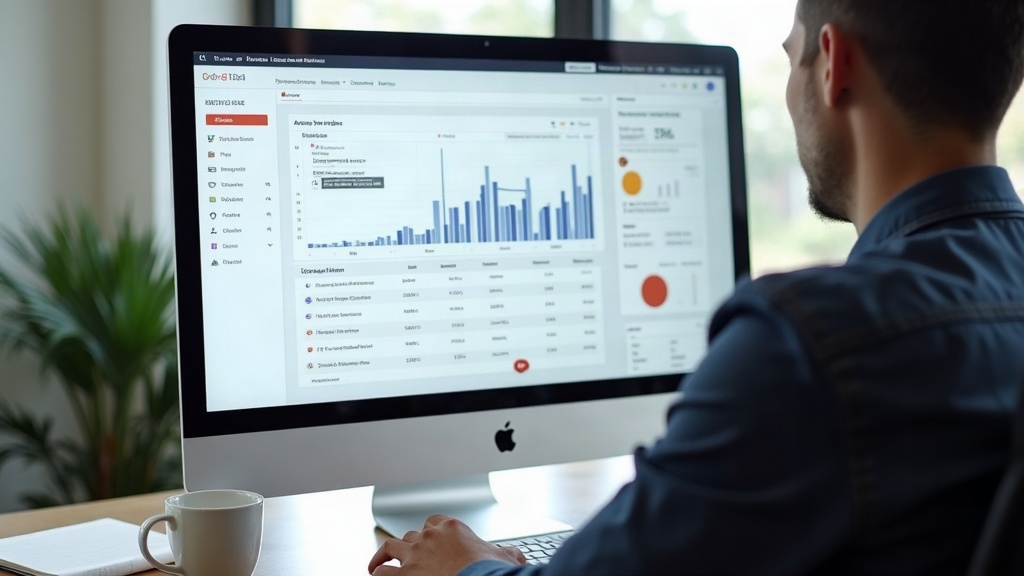
An Auction Insights report tells you exactly who else is bidding for the same searches you are, and how you stack up against them on impression share, position, and overlap. If you run google ppc advertising campaigns in a market as crowded as New York City, this report is one of the fastest ways to see whether you’re actually winning or just spending. Read it wrong, though, and you’ll draw the wrong conclusions and waste budget chasing the wrong competitor.
Below is a practical, column-by-column breakdown of how to read Auction Insights for NYC-based campaigns, what each metric really means, and how to turn the data into decisions instead of just numbers on a screen.
What the Auction Insights Report Actually Shows You
Auction Insights is a built-in Google Ads report available at the campaign, ad group, or keyword level. It shows you a list of other advertisers competing in the same auctions as you, along with several performance columns compared side by side.
It does not show you competitor budgets, exact bids, or full account structure. Instead, it shows relative performance: how often you show up compared to them, and where you rank when you both appear.
- Impression share — the percentage of eligible auctions where your ad actually showed
- Overlap rate — how often a competitor’s ad appeared in the same auction as yours
- Position above rate — how often their ad ranked higher than yours when you both showed
- Top of page rate — how often their ad appeared at the top of the results page
- Outranking share — how often your ad ranked higher than theirs, or showed when theirs didn’t
Why This Report Matters More in a Market Like NYC
New York advertisers are usually bidding against dozens of competitors for the same handful of high-intent local terms, whether that’s “personal injury lawyer Manhattan” or “emergency plumber Brooklyn.” Auction density is high, cost-per-click is high, and small differences in Quality Score or ad relevance get magnified.
In this kind of environment, Auction Insights becomes less of a curiosity and more of a diagnostic tool. It helps you separate two very different problems: not enough budget, or not enough relevance. Those two problems have completely different fixes, and guessing wrong wastes real money fast.
Local Competitors vs. National Chains
One thing that trips up a lot of NYC advertisers is not realizing who they’re actually competing against. Auction Insights often reveals a mix of true local competitors and large national brands bidding broadly across many metro areas.
National advertisers can absorb a lower position in New York specifically because the city is just one market among many for them. A local business competing purely on local intent needs a different strategy than one trying to out-bid a nationwide budget.
How to Read Each Column Without Misinterpreting It
The columns look simple, but they’re frequently misread. Here’s what each one is really telling you.
Impression Share
This is your share of the total auctions you were eligible for, not your share of all searches for that keyword. A low impression share can mean your budget is capped, your bids are too low, or your Quality Score is dragging down your ad rank. It’s the starting point, not the whole story.
Overlap Rate
A high overlap rate with a specific competitor means you’re consistently going head-to-head with them. This is useful for identifying your real competitive set, which in NYC might be two or three direct rivals rather than every business in your category.
Position Above Rate
This tells you how often a competitor outranked you when you both appeared. It’s a strong signal, but remember that ad rank is a mix of bid, expected click-through rate, ad relevance, and landing page experience — not budget alone. A competitor with a smaller budget but tighter ad copy and a faster landing page can still beat you here.
Top of Page Rate and Absolute Top of Page Rate
These show how often ads appeared above the organic results at all, and specifically in the very first position. If a competitor’s absolute top of page rate is climbing while yours is flat, that’s often the earliest warning sign of a shift in the competitive landscape, well before your click volume or cost-per-click actually moves.
Outranking Share
This combines both scenarios in your favor: times you ranked higher than them, and times you showed when they didn’t show at all. It’s a good single-number gut check on overall competitive strength for a given keyword or campaign.
Turning the Report Into Actions
Numbers alone don’t fix anything. Here’s how each pattern typically translates into a real next step.
| What You See in the Report | Likely Cause | Reasonable Next Step |
|---|---|---|
| Low impression share, high position above rate from one competitor | Budget capping or low bids relative to a strong, focused rival | Reassess budget allocation or bid strategy on that specific keyword theme |
| Decent impression share, but low top of page rate | Ad rank held back by weak Quality Score or ad relevance | Rework ad copy, extensions, and landing page alignment |
| Rising overlap with a new advertiser | New entrant targeting the same NYC audience | Review their ad copy and offer, then differentiate rather than copy |
| High outranking share but flat conversions | Winning the auction but losing on the landing page or offer | Audit landing page experience and calls to action |
Common Mistakes When Reading Auction Insights
Even experienced advertisers misread this report in predictable ways. A few worth watching for:
- Assuming a competitor with high impression share is spending more. Ad rank quality can close much of that gap without a bigger budget.
- Reacting to a single day or week of data. Auction dynamics shift with seasonality, promotions, and even day of week, so look at trends over several weeks.
- Ignoring campaigns with low search volume. Auction Insights needs enough auction volume to be statistically meaningful, so tiny keyword sets can show noisy, unreliable numbers.
- Treating every overlapping domain as a true competitor. Some overlap comes from broad match terms pulling in tangentially related businesses that aren’t real rivals.
Where Auction Insights Fits Into a Broader NYC PPC Strategy
Auction Insights works best as a recurring check-in, not a one-time report you pull and forget. Reviewing it monthly alongside your search term reports and Quality Score trends gives a much fuller picture of why performance is moving the way it is.
It’s also worth remembering that google adwords ppc advertising performance in New York is shaped heavily by how many advertisers are actively bidding on the same local intent terms at any given time. That competitive set can change quickly as new businesses launch campaigns or existing ones adjust budgets, which is exactly why this report deserves a regular slot in your account review rather than a once-a-year glance.
For businesses managing this alongside organic visibility, it’s also worth checking how paid and organic results interact on the same search page — something covered in more depth on our local SEO services page, since ranking well organically can reduce how much you need to rely on aggressive bidding to stay visible.
When the Report Signals It’s Time for Expert Help
If you’re consistently losing position to the same one or two competitors despite adjusting bids, or if your outranking share keeps dropping even as spend increases, that’s usually a sign the issue lives deeper than the bid itself — often in account structure, Quality Score, or campaign targeting. Managing google ppc online advertising at a competitive level in a market like New York often benefits from a structured, ongoing review process rather than occasional bid tweaks.
That’s the kind of work covered under our PPC and Google Advertising services, where auction data like this gets reviewed alongside landing pages, ad copy, and overall account structure to figure out where the real gains are hiding.
A Quick Monthly Checklist
- Pull Auction Insights at the campaign level and the top keyword-theme level separately
- Note any competitor whose overlap rate or position above rate jumped significantly
- Cross-check impression share loss against budget vs. rank, using the “lost IS” breakdown
- Compare trends over a 4-6 week window, not a single snapshot
- Flag any new domains appearing consistently in the overlap column
Reading Auction Insights well is really about pattern recognition over time, not a single dramatic discovery. The advertisers who check it regularly tend to catch competitive shifts early, while those who only glance at it after a bad month are usually reacting to a problem that’s already been building for weeks.
If you’d like a second set of eyes on what your own Auction Insights data is really telling you, or want help turning it into a clearer bidding and targeting strategy for your New York campaigns, the team at Robert Gerov Media is happy to walk through it with you. You can also find us on Google to see more about how we work with local businesses when you’re ready to take a closer look.
Tells Google to show you more from Robert Gerov Media in Search.
Related Posts
Struggling with rising CPCs? Learn how to diagnose low Quality Score in google ppc advertising accounts with a step-by-step NYC-focused checklist.
How to Diagnose Low Quality Score Issues in NYC Google Ads Accounts
What is WordPress SEO and how can NYC publishers protect rankings during core, plugin, or theme updates? A practical checklist for before and after.
What Is WordPress SEO? A Guide for NYC Publishers During Updates
Expert Shopify SEO tips for NYC merchants expanding internationally: URL structure, hreflang, and currency setup that avoid duplicate content and rank drops.
Shopify SEO Tips for Multi-Currency and International Storefronts
What is ecommerce SEO for same-day delivery? Learn how NYC online stores should structure pages, schema, and links to rank and convert local shoppers.
What Is Ecommerce SEO? Structuring NYC Same-Day Delivery Pages
Does Google My Business help SEO after a closure or move? Learn how NYC businesses can protect reviews, rankings, and reputation during the transition.
Does Google My Business Help SEO? Managing Reviews After a Move
Learn how to use AI for SEO the right way — research, drafting, audits, and AI search optimization — without sacrificing quality or rankings.
How to Use AI for SEO: A Practical Guide for New York Businesses
What is enterprise SEO and how do large organizations align stakeholder KPIs across departments? A practical breakdown of frameworks, audits, and tools.
What Is Enterprise SEO? Aligning Stakeholder KPIs Across Teams
What is national SEO and how do you keep landing pages consistent across markets? Learn the strategy, pitfalls, and systems that keep brands cohesive at scale.
What Is National SEO? How to Keep Landing Pages Brand-Consistent
Learn how to do local SEO for voice search queries, from Google Business Profile optimization to conversational content, built for NYC’s competitive market.
How to Do Local SEO for Voice Search: A Guide for NYC Businesses
What is an answering service and how should NYC medical and dental offices script after-hours calls? Learn triage steps, HIPAA tips, and cost factors.