


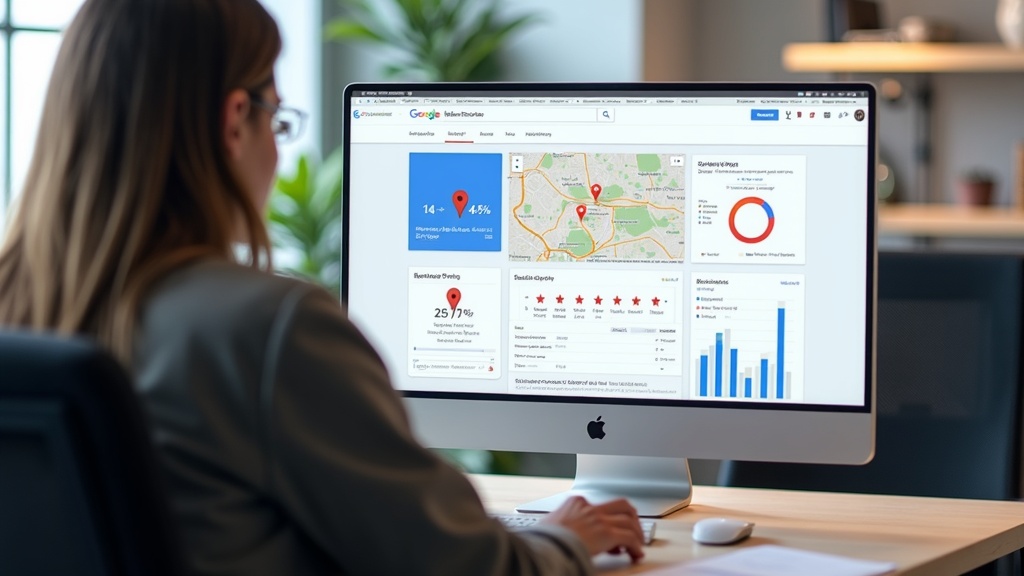
Local SEO is the practice of optimizing a business’s online presence so it ranks higher in search results for people searching nearby — think “dentist near me” or “best pizza in Brooklyn.” A huge piece of that puzzle is your Google Business Profile (GBP), the free listing that powers the Local Pack, the map and three-business block that appears above regular search results. In a market as crowded as New York City, understanding exactly which GBP signals move the needle can be the difference between showing up on page one or getting lost among thousands of competitors.
This guide breaks down what local SEO actually is, why it matters so much for NYC businesses, and which specific Google Business Profile factors influence whether you land in the coveted top three local results.
What Is Local SEO Marketing?
Local SEO marketing is a set of strategies designed to improve visibility in location-based searches. Unlike traditional SEO, which competes for rankings on a national or global scale, local SEO focuses on connecting a business with customers in a specific city, borough, or neighborhood.
It includes optimizing your Google Business Profile, building consistent business citations across the web, earning reviews, creating locally relevant content, and making sure your website signals the right location and service information to search engines.
Why Local SEO Is Important for NYC Businesses
New York City has more competing businesses per square mile than almost anywhere else in the country. Why is local SEO important here specifically? Because when hundreds of businesses offer the same service within a few blocks of each other, ranking in the Local Pack is often the single biggest driver of phone calls, foot traffic, and bookings.
- Most local searches happen on mobile devices, often while someone is already nearby and ready to visit or call.
- The Local Pack appears above organic results, meaning it captures attention before a user ever scrolls further.
- Consumers increasingly trust Google Business Profile information — reviews, hours, photos — over a business’s own website.
- Neighborhood-level competition in NYC means small ranking improvements can produce outsized results.
In short, local SEO is important because it puts your business in front of people who are ready to act, at the exact moment they’re searching.
The Three Pillars Google Uses to Rank the Local Pack
Google has confirmed that local rankings are determined by three main factors: relevance, distance, and prominence. Understanding how each one works helps explain why some NYC businesses consistently outrank others despite being younger or smaller.
Relevance
Relevance measures how well your Google Business Profile matches what someone is searching for. This depends on your business categories, the services and products listed on your profile, and how well your description and posts align with common search terms.
Distance
Distance considers how far each potential result is from the location term used in a search, or from the searcher’s current location if no location is specified. You can’t change where your business physically sits, but you can make sure your address and service area are configured correctly so Google understands exactly where you operate.
Prominence
Prominence reflects how well-known and well-reviewed a business is, both online and offline. This is where most of the controllable Google Business Profile signals live — and where the majority of local SEO effort in a competitive market like NYC should be focused.
Key Google Business Profile Signals That Affect Local Pack Rankings
Here are the specific GBP elements that most directly influence prominence and relevance in local search results:
- Review quantity, quality, and recency: A steady stream of recent, positive reviews signals an active, trustworthy business. Review velocity matters as much as star rating.
- Review responses: Businesses that reply to reviews — especially negative ones — tend to build more trust with both customers and Google’s algorithm.
- Primary and secondary categories: Choosing the most accurate primary category, and relevant secondary categories, directly affects which searches trigger your listing.
- Business description and services list: A complete, keyword-relevant description and service list help Google match your profile to specific searches.
- Photos and videos: Profiles with frequent, high-quality photo uploads tend to perform better and also improve click-through rate from the map pack.
- Posts and updates: Regular Google Posts signal an actively managed profile and can reinforce relevance for specific offers or services.
- NAP consistency: Your Name, Address, and Phone number must match exactly across your website, GBP, and directory citations. Inconsistencies erode trust signals.
- Q&A section activity: An active, accurately answered Q&A section adds relevance and shows engagement.
- Website link and landing page quality: The page your GBP links to should be fast, mobile-friendly, and clearly relevant to the services listed.
How to Do Local SEO: A Practical Starting Framework
Knowing how to do local SEO effectively means treating your Google Business Profile as an ongoing project, not a one-time setup. Here’s a realistic sequence for NYC businesses:
- Claim and fully verify your Google Business Profile if you haven’t already, and confirm your service area or physical address is accurate.
- Audit your NAP consistency across your website, GBP, and major directories like Yelp, Apple Maps, and industry-specific listings.
- Select precise categories that reflect exactly what you do — avoid vague or overly broad category choices.
- Build a genuine review acquisition process by asking satisfied customers at the right moment, rather than in bulk campaigns that look unnatural.
- Respond to every review within a reasonable timeframe, thanking positive reviewers and addressing concerns professionally in negative ones.
- Upload fresh photos regularly — new work, team photos, storefront updates — rather than a one-time batch at setup.
- Publish Google Posts tied to promotions, seasonal services, or updates to keep the profile active.
- Align your website content with the neighborhoods and services you want to rank for, ensuring your local SEO strategy and on-site content work together rather than in isolation.
Local SEO vs. Traditional Organic SEO
These two disciplines overlap but serve different goals. The table below outlines the core differences.
| Factor | Local SEO | Traditional Organic SEO |
|---|---|---|
| Primary goal | Rank in Local Pack and Maps for nearby searches | Rank in standard organic results, any location |
| Key platform | Google Business Profile | Website content and backlinks |
| Main ranking factors | Relevance, distance, prominence | Content quality, authority, technical SEO |
| Best for | Businesses with a physical location or defined service area | Businesses targeting broad or national audiences |
| Review impact | Very high | Low to moderate |
Many NYC businesses need both approaches working together, particularly if they serve customers online and in person. A national SEO strategy can complement local efforts when a business also sells beyond its immediate neighborhood.
Common Local SEO Mistakes NYC Businesses Make
- Choosing an overly broad or incorrect primary category to try to rank for more terms.
- Letting reviews go unanswered for weeks or months.
- Using a virtual office or inconsistent address across platforms, which can trigger suspicion or suppression.
- Neglecting photo updates, leaving a profile looking outdated or inactive.
- Ignoring duplicate listings that split review counts and confuse Google’s algorithm.
Why Work With a Local SEO Company
Managing Google Business Profile signals correctly takes consistent attention — categorization changes, review monitoring, citation audits, and content updates all need to happen on an ongoing basis. A local SEO company brings the experience to spot issues quickly and prioritize the changes that will actually move rankings, rather than guessing at what might help.
For businesses that also rely on Google or Meta ads to fill in gaps while organic rankings build, pairing Google Business Profile SEO with a broader paid strategy often produces faster, more consistent visibility across NYC’s competitive search landscape.
Putting It All Together
Local SEO is not a single task but an ongoing combination of relevance, distance, and prominence signals — and Google Business Profile sits at the center of nearly all of them. For NYC businesses, small consistent improvements to reviews, categories, photos, and profile activity often produce measurable ranking changes over time.
If you’d like a clearer picture of where your own Google Business Profile stands, feel free to browse our blog for more local SEO insights, or check out Robert Gerov Media’s own Google Business Profile to see these principles in action. Reach out whenever you’re ready to talk through what’s realistic for your business.
Tells Google to show you more from Robert Gerov Media in Search.
Related Posts
Struggling with rising CPCs? Learn how to diagnose low Quality Score in google ppc advertising accounts with a step-by-step NYC-focused checklist.
How to Diagnose Low Quality Score Issues in NYC Google Ads Accounts
What is WordPress SEO and how can NYC publishers protect rankings during core, plugin, or theme updates? A practical checklist for before and after.
What Is WordPress SEO? A Guide for NYC Publishers During Updates
Expert Shopify SEO tips for NYC merchants expanding internationally: URL structure, hreflang, and currency setup that avoid duplicate content and rank drops.
Shopify SEO Tips for Multi-Currency and International Storefronts
What is ecommerce SEO for same-day delivery? Learn how NYC online stores should structure pages, schema, and links to rank and convert local shoppers.
What Is Ecommerce SEO? Structuring NYC Same-Day Delivery Pages
Does Google My Business help SEO after a closure or move? Learn how NYC businesses can protect reviews, rankings, and reputation during the transition.
Does Google My Business Help SEO? Managing Reviews After a Move
Learn how to use AI for SEO the right way — research, drafting, audits, and AI search optimization — without sacrificing quality or rankings.
How to Use AI for SEO: A Practical Guide for New York Businesses
What is enterprise SEO and how do large organizations align stakeholder KPIs across departments? A practical breakdown of frameworks, audits, and tools.
What Is Enterprise SEO? Aligning Stakeholder KPIs Across Teams
What is national SEO and how do you keep landing pages consistent across markets? Learn the strategy, pitfalls, and systems that keep brands cohesive at scale.
What Is National SEO? How to Keep Landing Pages Brand-Consistent
Learn how to do local SEO for voice search queries, from Google Business Profile optimization to conversational content, built for NYC’s competitive market.
How to Do Local SEO for Voice Search: A Guide for NYC Businesses
What is an answering service and how should NYC medical and dental offices script after-hours calls? Learn triage steps, HIPAA tips, and cost factors.