


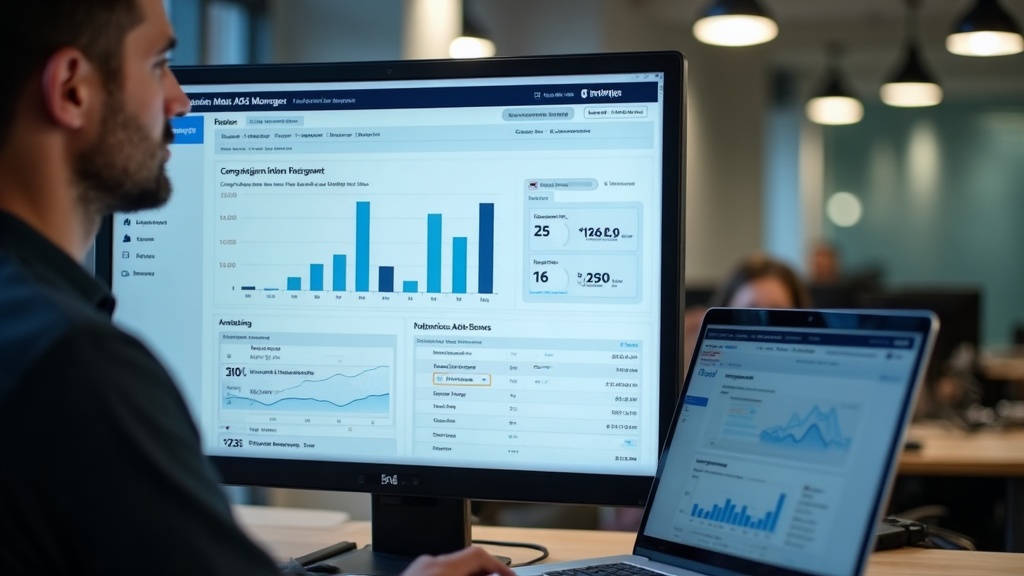
Meta advertising is paid promotion delivered across Facebook, Instagram, Messenger, and the Audience Network — all managed through Meta’s centralized Ads Manager platform. At its core, it lets businesses place visual and text-based ads in front of specific people based on who those people are, what they do, and what they care about.
That last part is where Meta advertising becomes genuinely powerful. Most advertisers know they can target by age, gender, and location. What many overlook is that those basic filters are just the entry point. The real edge lies in the behavioral, psychographic, and intent-based layers sitting underneath them.
What Is Meta Advertising, Really?
Meta advertising is not simply “running Facebook ads.” It is a full-funnel paid media channel that spans awareness, consideration, and conversion — with a targeting infrastructure built on one of the largest first-party datasets in digital marketing.
Meta collects signals from on-platform activity (likes, shares, page follows, video watch time), off-platform browsing (through the Meta Pixel and Conversions API), app usage, purchase history, and more. Advertisers access that signal layer through audiences, placements, and optimization settings to reach people who are genuinely likely to take action — not just people who happen to fit a demographic bracket.
If you want a deeper look at how a managed campaign is structured and run, the Meta Advertising services page covers the full approach from strategy through execution.
Core Audience Types in Meta Ads Manager
Saved Audiences (Interest and Behavior Targeting)
This is the layer most people think of as “basic targeting,” but it goes much further than demographics. Saved audiences let you layer interests (specific topics, brands, activities), behaviors (frequent travelers, online shoppers, people who recently moved), and connection types (fans of your page, friends of fans) on top of demographic filters.
The behavior categories in particular draw on real purchase data, device usage patterns, and life events — giving advertisers the ability to reach people in a genuine decision-making context, not just a loose interest category.
Custom Audiences
Custom audiences are built from data you already own. You can upload a customer list and Meta will match email addresses or phone numbers to user profiles. You can also create audiences from:
- Website visitors (via the Meta Pixel or Conversions API)
- App users who completed specific in-app actions
- People who engaged with your Facebook or Instagram content
- Video viewers who watched a certain percentage of a specific video
- Lead form openers or submitters
- People who interacted with your Instagram Shopping catalog
This makes custom audiences the backbone of retargeting — reaching people who already know your brand and are much more likely to convert on a second or third exposure.
Lookalike Audiences
Lookalike audiences are Meta’s way of expanding reach intelligently. You provide a source audience (typically your best customers or highest-value converters), and Meta’s algorithm finds users with statistically similar profiles across the broader platform population.
A 1% lookalike is the tightest and most similar match; a 5–10% lookalike casts a wider net with some trade-off in precision. For scaling a campaign beyond a core retargeting pool, lookalikes remain one of the most efficient prospecting tools available in paid social.
Advanced Targeting Layers Most Advertisers Miss
Engagement-Based Retargeting
Beyond website visitors, Meta lets you build audiences from very specific on-platform engagement signals — people who watched 75% of a particular video, people who saved a post, or people who opened but did not submit a lead form. These micro-signals often indicate higher intent than a generic page visit and allow for more relevant, sequenced messaging.
Life Event Targeting
Meta’s platform captures life moments — a recent engagement, a new job, a move to a new city — and makes them available as targeting filters. For businesses whose product or service is tied to a transition (home services, financial planning, health and wellness), life event targeting can dramatically improve relevance and timing.
Conversions API (CAPI)
With browser-based tracking increasingly limited by cookie restrictions and iOS privacy changes, the Conversions API allows advertisers to send event data directly from their server to Meta — bypassing client-side limitations. Businesses running CAPI alongside the Pixel consistently see better attribution, lower cost-per-result, and improved algorithm optimization because Meta’s system has more accurate signal to work with.
Advantage+ Audiences
Meta’s machine-learning-driven Advantage+ audience option lets the algorithm dynamically expand targeting beyond your defined parameters when it detects conversion opportunities outside those bounds. For mature accounts with strong pixel data, this can surface high-converting segments that manual targeting would never have identified.
Meta Advertising vs. Google Advertising: Which Does What Better?
| Feature | Meta Advertising | Google Advertising |
|---|---|---|
| Primary intent | Interrupt and inspire (social feed) | Capture active search intent |
| Audience targeting | Interest, behavior, custom, lookalike | Keywords, in-market audiences, remarketing |
| Best for awareness | Strong — visual, video, broad reach | Moderate — Display and YouTube help |
| Best for conversion | Strong with retargeting and CAPI | Very strong for high-intent searches |
| Creative format | Image, video, carousel, stories, reels | Text search ads, Shopping, responsive display |
| Cost structure | CPM / CPC / CPR depending on objective | CPC / CPM / CPA depending on campaign type |
Many businesses in competitive markets run both channels in parallel — Meta to build awareness and nurture prospects, Google Advertising to capture demand at the moment of active search. The two platforms reinforce each other when managed with a unified strategy.
Campaign Objectives and How They Shape Targeting Behavior
One of the most underappreciated aspects of Meta advertising is how the campaign objective you select directly shapes how the algorithm spends your budget. Meta optimizes delivery toward people most likely to complete the action tied to that objective — so choosing the wrong objective effectively means you are asking the algorithm to find the wrong people.
- Awareness: Optimizes for reach and frequency — useful for brand-building but not for driving immediate action.
- Traffic: Finds people likely to click through — good for content promotion, but click quality varies.
- Engagement: Targets users who comment, like, and share — useful for social proof but not a direct revenue driver.
- Leads: Optimizes for form submissions either on-platform or on your website.
- Sales: Optimizes for purchase or conversion events — the highest-intent objective and the most dependent on clean pixel or CAPI data.
Aligning the objective to the actual business goal, and ensuring the measurement infrastructure is in place before launching, is the difference between a campaign that scales and one that burns budget with nothing to show for it.
What Makes Meta Advertising Especially Useful for Local and Niche Businesses
For businesses serving a defined geography — a service area, a city, a set of zip codes — Meta’s radius and pin-drop location targeting allows hyper-local audience construction. Combined with interest and behavioral filters, a New York-based business can reach, for example, homeowners within five miles who have recently shown interest in home renovation, rather than anyone in the city who vaguely fits an age bracket.
That precision matters because wasted impressions have a real cost. The tighter and more relevant the audience, the better the creative resonates, the lower the cost-per-click, and the higher the eventual return on ad spend.
A Few Things to Get Right Before Launching
Meta advertising rewards preparation. Before any campaign goes live, the following should be confirmed:
- Meta Pixel (or Conversions API) is installed and firing correctly on all key pages
- Conversion events are mapped to actual business goals, not just generic page views
- Creative assets match the placement — a 9:16 vertical video for Stories and Reels, 1:1 for Feed
- Landing pages load fast and match the messaging of the ad
- Audience sizes are large enough to exit the learning phase without exhausting budget
Skipping any of these steps usually means spending real money while the algorithm stumbles through an incomplete learning phase — a costly and avoidable problem.
Ready to Take a Closer Look?
Meta advertising is one of the most flexible and data-rich paid channels available to businesses of any size — but the gap between running ads and running effective ads is significant. The targeting depth described here only pays off when the strategy, creative, tracking, and optimization are all aligned.
If you are evaluating whether Meta advertising fits your growth goals, or if current campaigns are not performing the way they should, find Robert Gerov Media on Google and reach out when you are ready to talk through what a focused, properly structured campaign would look like for your business.
Tells Google to show you more from Robert Gerov Media in Search.
Related Posts
Struggling with rising CPCs? Learn how to diagnose low Quality Score in google ppc advertising accounts with a step-by-step NYC-focused checklist.
How to Diagnose Low Quality Score Issues in NYC Google Ads Accounts
What is WordPress SEO and how can NYC publishers protect rankings during core, plugin, or theme updates? A practical checklist for before and after.
What Is WordPress SEO? A Guide for NYC Publishers During Updates
Expert Shopify SEO tips for NYC merchants expanding internationally: URL structure, hreflang, and currency setup that avoid duplicate content and rank drops.
Shopify SEO Tips for Multi-Currency and International Storefronts
What is ecommerce SEO for same-day delivery? Learn how NYC online stores should structure pages, schema, and links to rank and convert local shoppers.
What Is Ecommerce SEO? Structuring NYC Same-Day Delivery Pages
Does Google My Business help SEO after a closure or move? Learn how NYC businesses can protect reviews, rankings, and reputation during the transition.
Does Google My Business Help SEO? Managing Reviews After a Move
Learn how to use AI for SEO the right way — research, drafting, audits, and AI search optimization — without sacrificing quality or rankings.
How to Use AI for SEO: A Practical Guide for New York Businesses
What is enterprise SEO and how do large organizations align stakeholder KPIs across departments? A practical breakdown of frameworks, audits, and tools.
What Is Enterprise SEO? Aligning Stakeholder KPIs Across Teams
What is national SEO and how do you keep landing pages consistent across markets? Learn the strategy, pitfalls, and systems that keep brands cohesive at scale.
What Is National SEO? How to Keep Landing Pages Brand-Consistent
Learn how to do local SEO for voice search queries, from Google Business Profile optimization to conversational content, built for NYC’s competitive market.
How to Do Local SEO for Voice Search: A Guide for NYC Businesses
What is an answering service and how should NYC medical and dental offices script after-hours calls? Learn triage steps, HIPAA tips, and cost factors.